Writing at Tintagel Primary School
"Words are, in my not-so-humble opinion, our most inexhaustible source of magic."
J. K. Rowling, Harry Potter Series
Finding the Magic in Words:
At Tintagel School, writing matters.
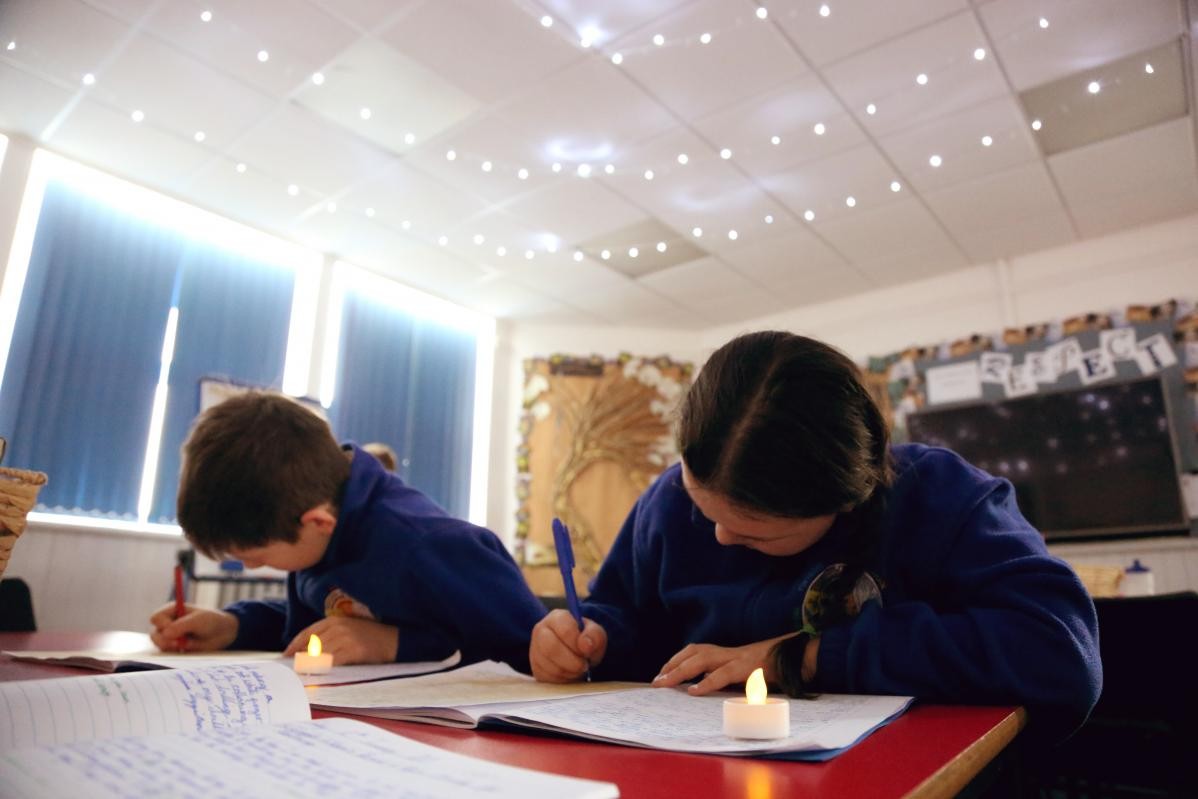
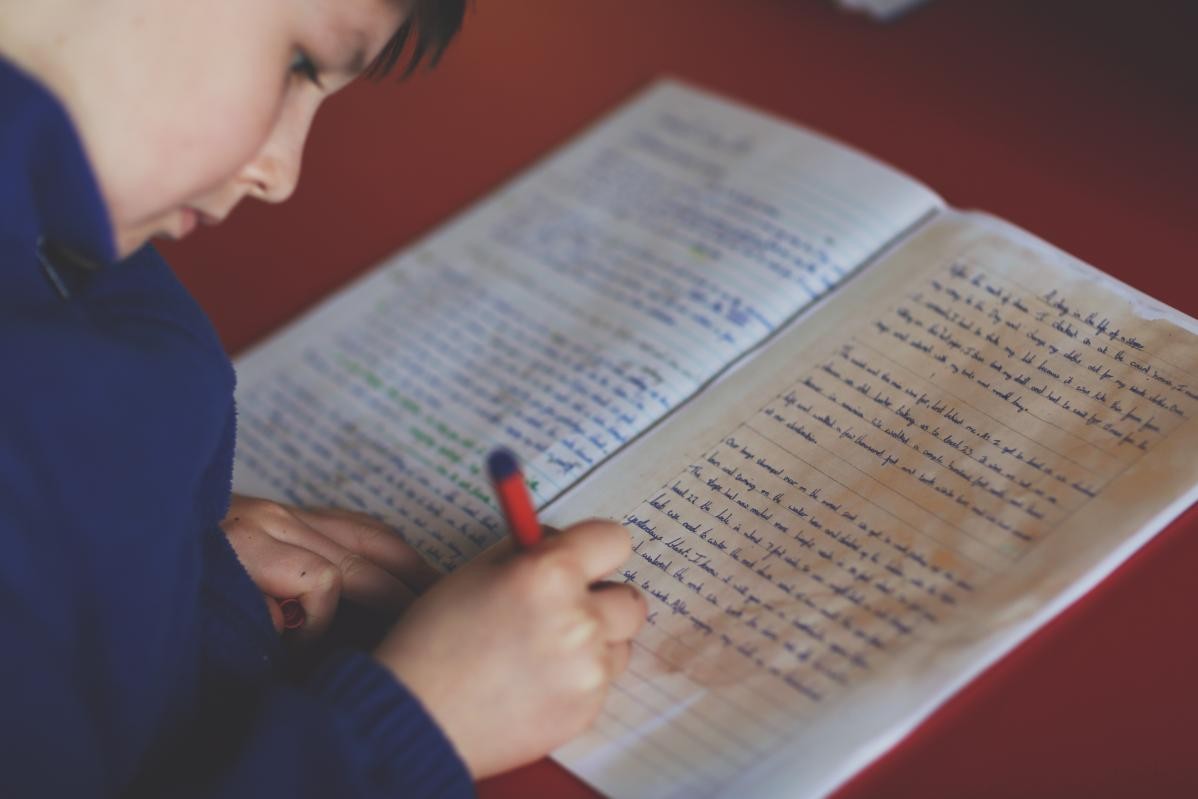
We want every child to discover that putting words onto a page gives them something extraordinarily powerful: a voice. Writing allows children to capture an idea, tell a story, explain their thinking, persuade someone to think differently, share knowledge and make themselves heard. Our ambition is therefore bigger than teaching children simply to complete a piece of writing. We want to develop confident, competent and passionate young authors who understand the tools available to them and can make deliberate choices about how to use them for different purposes and audiences.
This reflects the ambition of the National Curriculum for English: that children should develop a strong command of spoken and written language and learn to write clearly, accurately and coherently, adapting their language and style for different contexts, purposes and audiences.
Learning the Tools of a Writer:
From Year 1 onwards, our teaching is underpinned by Grammarsaurus and its Place Value of Punctuation and Grammar (PVPG) approach. Rather than grammar and punctuation being disconnected exercises, children systematically build their understanding of the fundamental components of sentences and learn how these work together to create effective writing. As children move through the school, these foundations are revisited, strengthened and extended. They build an increasingly sophisticated writer's toolkit, developing the vocabulary, sentence structures, punctuation and grammatical knowledge that enable them to take greater control of their writing.
But knowing the tools is only part of becoming a writer. Children also need something worth writing about.
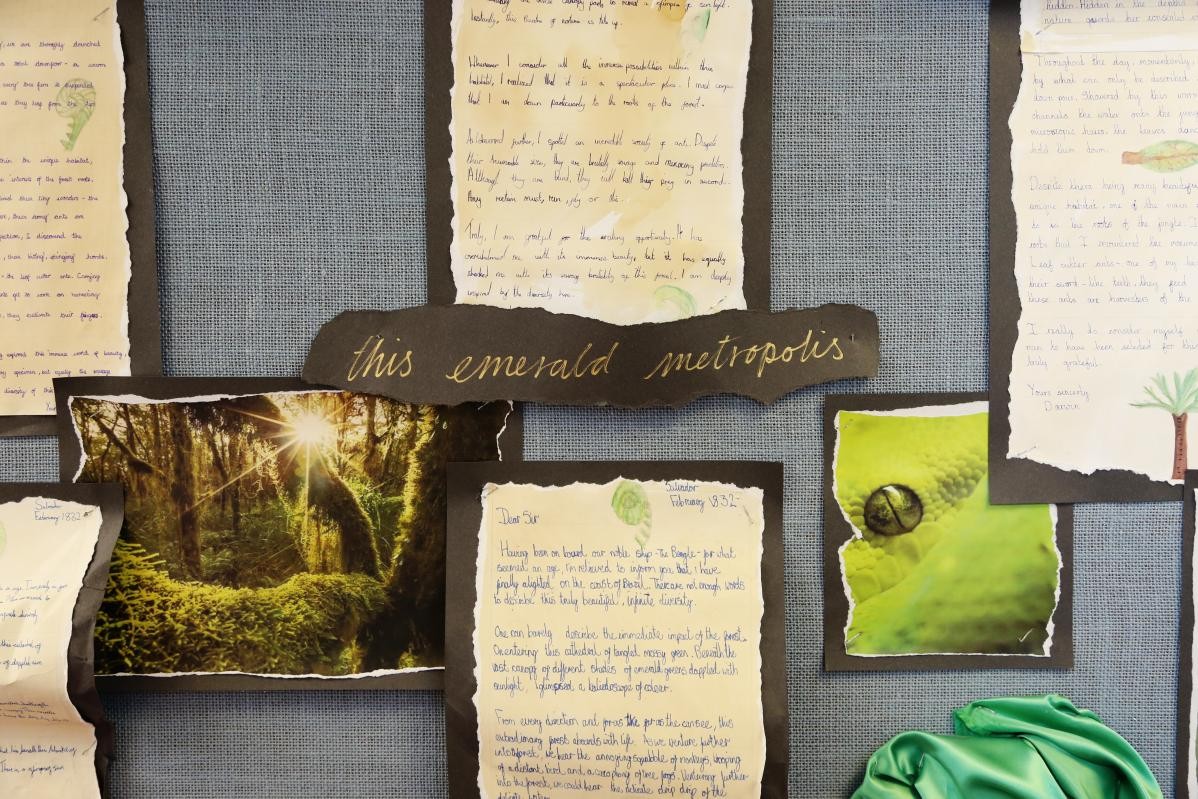
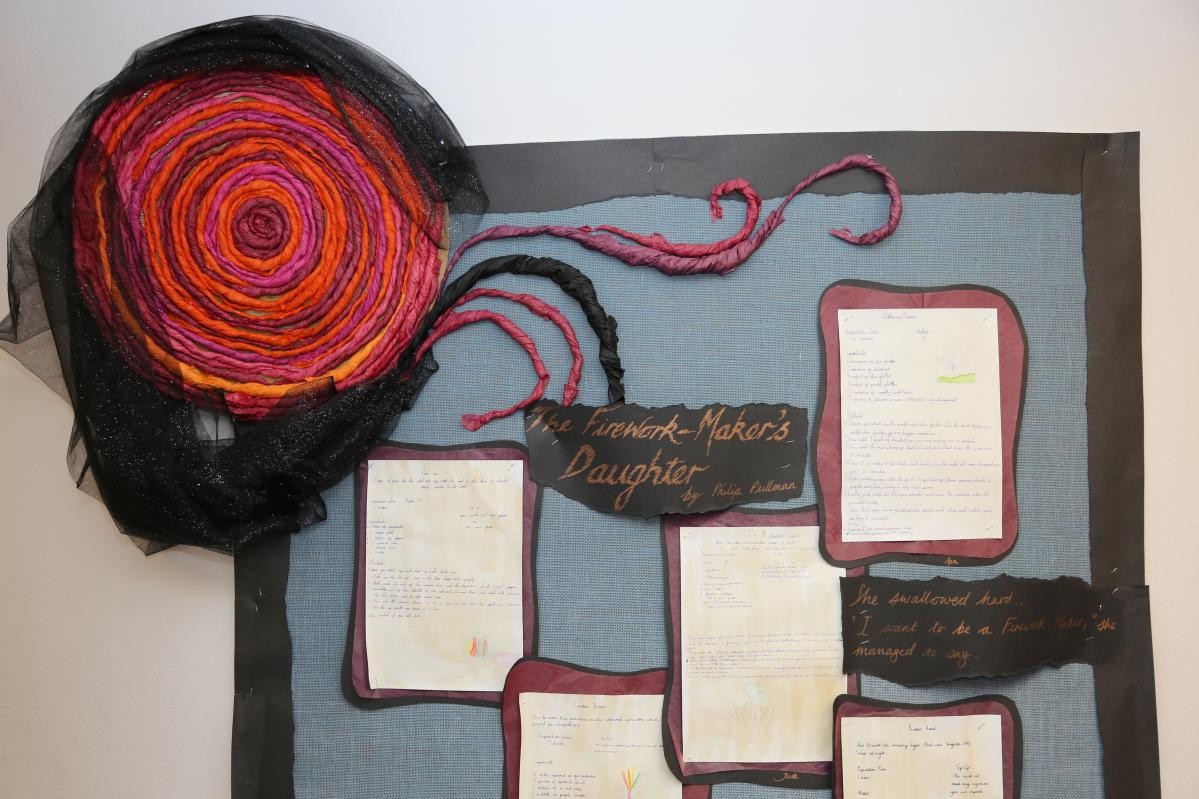
Our writing curriculum is therefore deliberately connected to children's wider learning. Wherever meaningful, Grammarsaurus writing units are carefully woven into each class's overarching enquiry or linked to learning elsewhere in the curriculum, including subjects such as science, history and geography. Writing is not a succession of random tasks. Children develop knowledge, encounter ideas, talk, read and investigate so that when they come to write, they have something to say. High-quality, beautiful texts sit alongside these units. Through them, children encounter ambitious vocabulary, interesting structures and wonderful examples of what language can do. They explore words, notice the choices authors make and begin to make increasingly deliberate choices of their own.
Across their time at Tintagel, children experience the breadth of writing required by the National Curriculum and learn to write across different forms and genres. Crucially, they learn that audience and purpose matter.
Where Writing Begins - EYFS
We believe children become authors long before they can write a perfectly formed sentence. In Reception, this begins through Drawing Club. Beautiful stories, imagination, talk and drawing provide the invitation for children to put pencil to paper. Each day brings a new focus and opportunities to develop vocabulary, ideas, mark-making and early writing.
There is an important principle underneath this: children write when they are ready.
Drawing, talking, imagining and making marks all have value in themselves. Gradually, children discover that the marks they make can communicate their ideas to somebody else. From these joyful beginnings comes the confidence and desire to write.
Our Aims for Writing:
At Tintagel Primary School, we aim for every child, whatever their starting point, to leave us seeing themselves as a writer.
We want our children to:
-
write with confidence, passion and purpose, knowing that their words have value;
-
write clearly and accurately for a range of audiences, purposes and genres;
-
develop a secure writer's toolkit, using vocabulary, grammar and punctuation deliberately and effectively;
-
develop a rich and ambitious vocabulary, inspired by high-quality texts and learning across the curriculum;
-
understand writing as a craft, learning to plan, compose, edit and improve;
-
become independent, resilient authors, making thoughtful choices about their writing; and
-
understand the power of the written word to communicate ideas, share knowledge, tell stories and make their voice heard.
By the time our children leave Tintagel, we want them to know that the blank page is not something to fear. It is an opportunity.
"The pen is mightier than the sword."
Edward Bulwer-Lytton
We want every child at Tintagel to leave us understanding why.