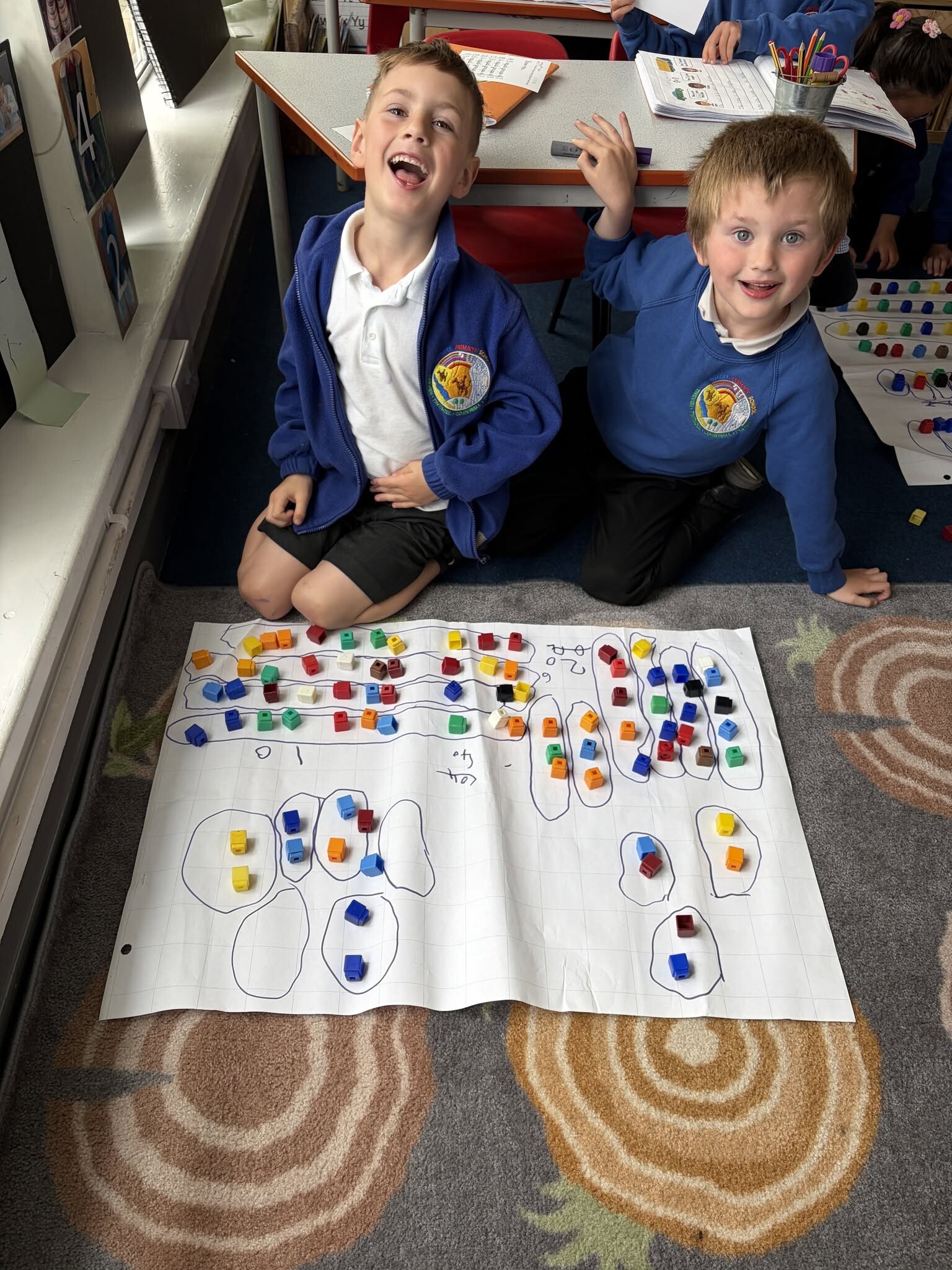
Dean Schlicter
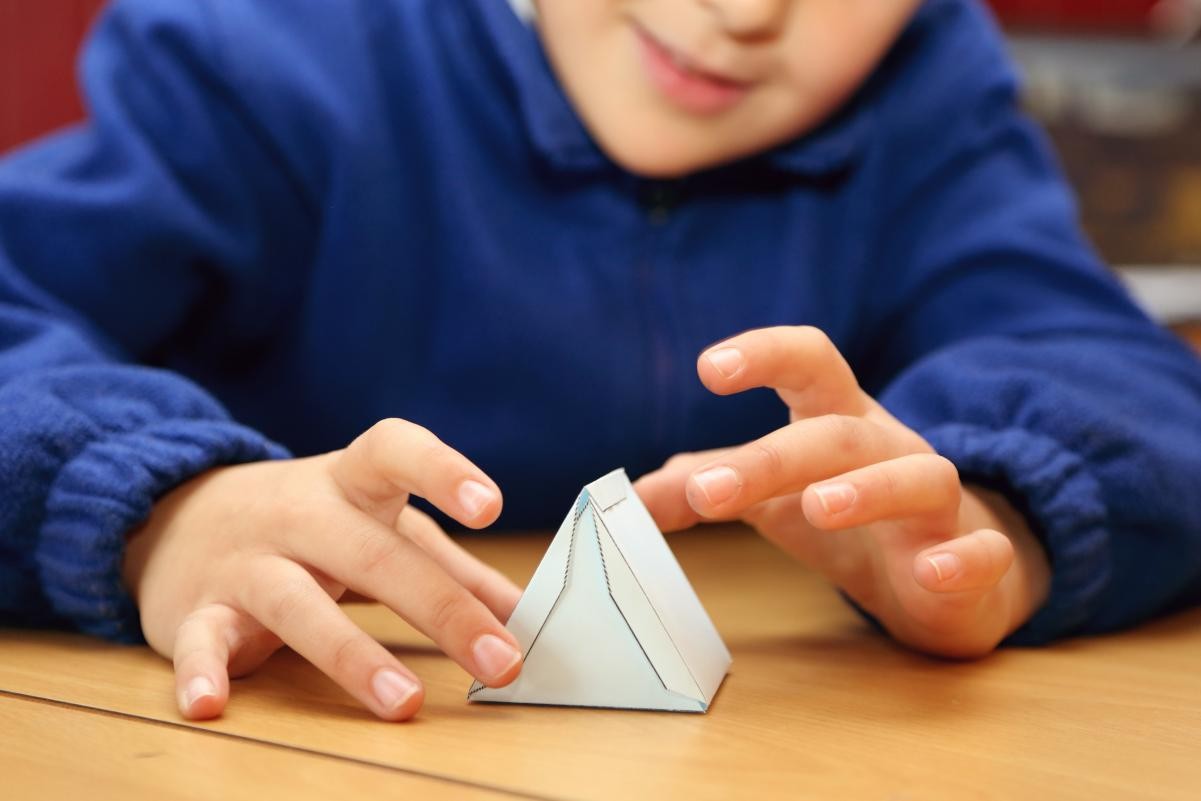
Mathematics at Tintagel Primary School
At Tintagel Primary School, we believe that every child can succeed in mathematics. We want our pupils to see themselves as capable mathematicians who approach challenges with confidence, resilience and curiosity.
Our mathematics curriculum is built around a mastery approach, where children develop a deep understanding of mathematical concepts and make meaningful connections between different areas of learning. We believe that fluency, reasoning and problem solving are equally important and should be woven through all aspects of mathematics teaching.
Through carefully sequenced learning, children develop secure foundations in number and calculation before applying their knowledge in increasingly complex contexts. We encourage pupils to explain their thinking, justify their choices, identify patterns and make connections, helping them to develop confidence and flexibility as mathematicians.
Using a combination of concrete resources, pictorial representations and abstract methods, children are supported to build secure understanding and develop the confidence to tackle unfamiliar problems. We believe that mistakes are an important part of learning and encourage all pupils to develop resilience and a positive attitude towards mathematical challenge.
Our ambition is that every child leaves Tintagel Primary School with strong mathematical knowledge, confidence with number and the skills needed to succeed in the next stage of their education and beyond.
Aims
Through our mathematics curriculum, we aim for all pupils to:
- Develop fluency in number, calculation and mathematical procedures.
- Reason mathematically by explaining, justifying and proving their thinking.
- Apply their knowledge to solve increasingly sophisticated problems.
- Develop confidence and resilience when faced with mathematical challenges.
- Make connections between different mathematical concepts and areas of learning.
- Use accurate mathematical vocabulary to communicate their understanding.
- Develop efficient mental calculation and arithmetic strategies.
- Recognise patterns, relationships and structures within mathematics.
- Appreciate the relevance and importance of mathematics in everyday life.
Developing Foundational Mathematical Fluency
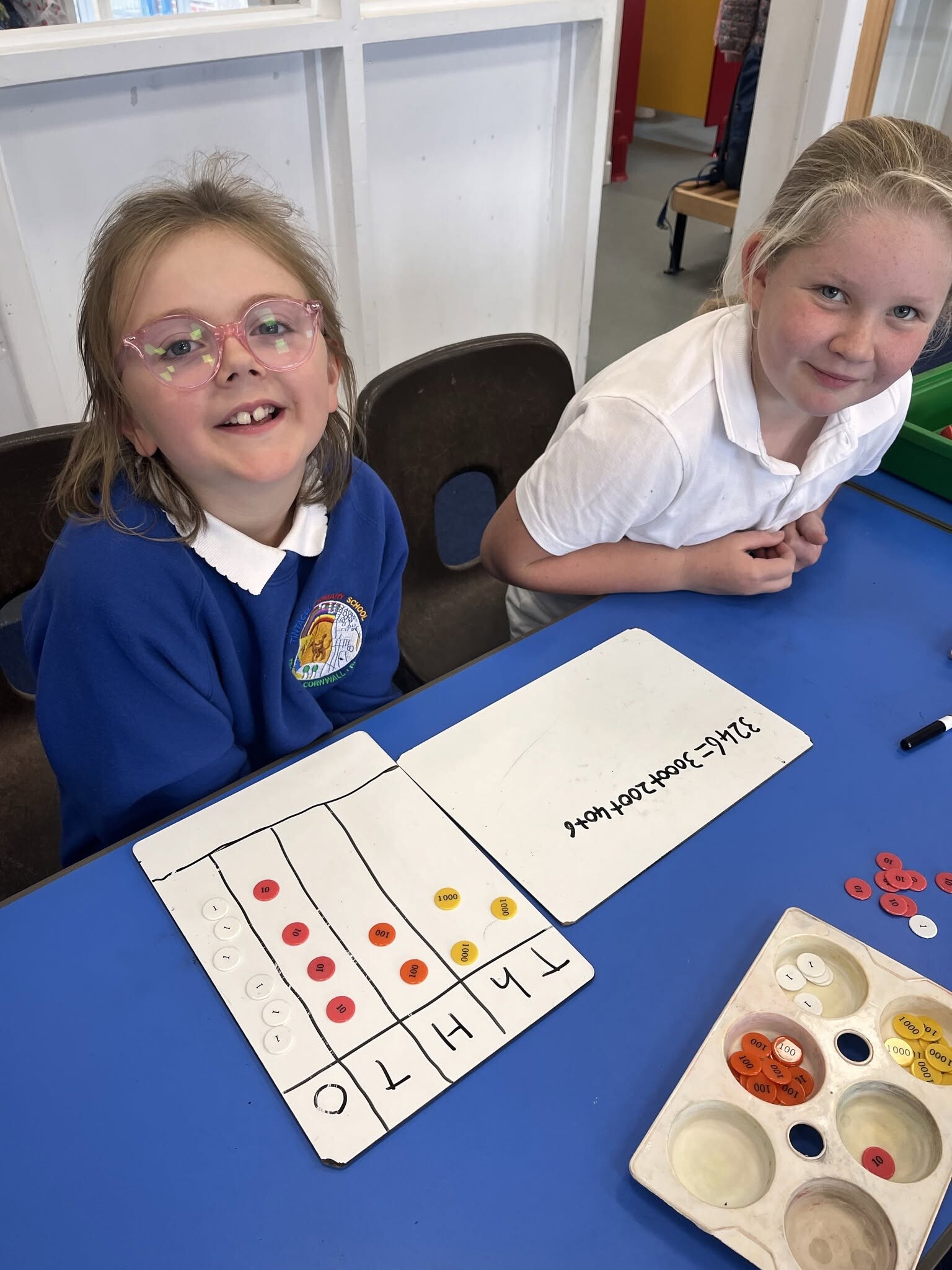
Fluency is the foundation of successful mathematics learning. We want children to develop accuracy, efficiency and flexibility with number so that they can confidently apply their knowledge when reasoning and solving problems.
In Nursery, we use 'Mastering The Curriculum' to develop early number sense and start to develop a deeper understanding of number relationships.
From Reception through to Year 4, children participate in the Number Sense programme. This supports the development of strong number sense, secure understanding of number facts and increasing confidence with number bonds and the relationships between mental additionl and subtraction.
In Years 5 and 6, pupils continue to develop fluency through carefully designed arithmetic sessions that revisit and consolidate key knowledge. These sessions focus on developing dexterity with number, strengthening mental strategies and ensuring that pupils can apply previously learned skills efficiently and accurately.
By placing fluency at the heart of our curriculum, we enable children to access more complex reasoning and problem-solving opportunities with confidence.
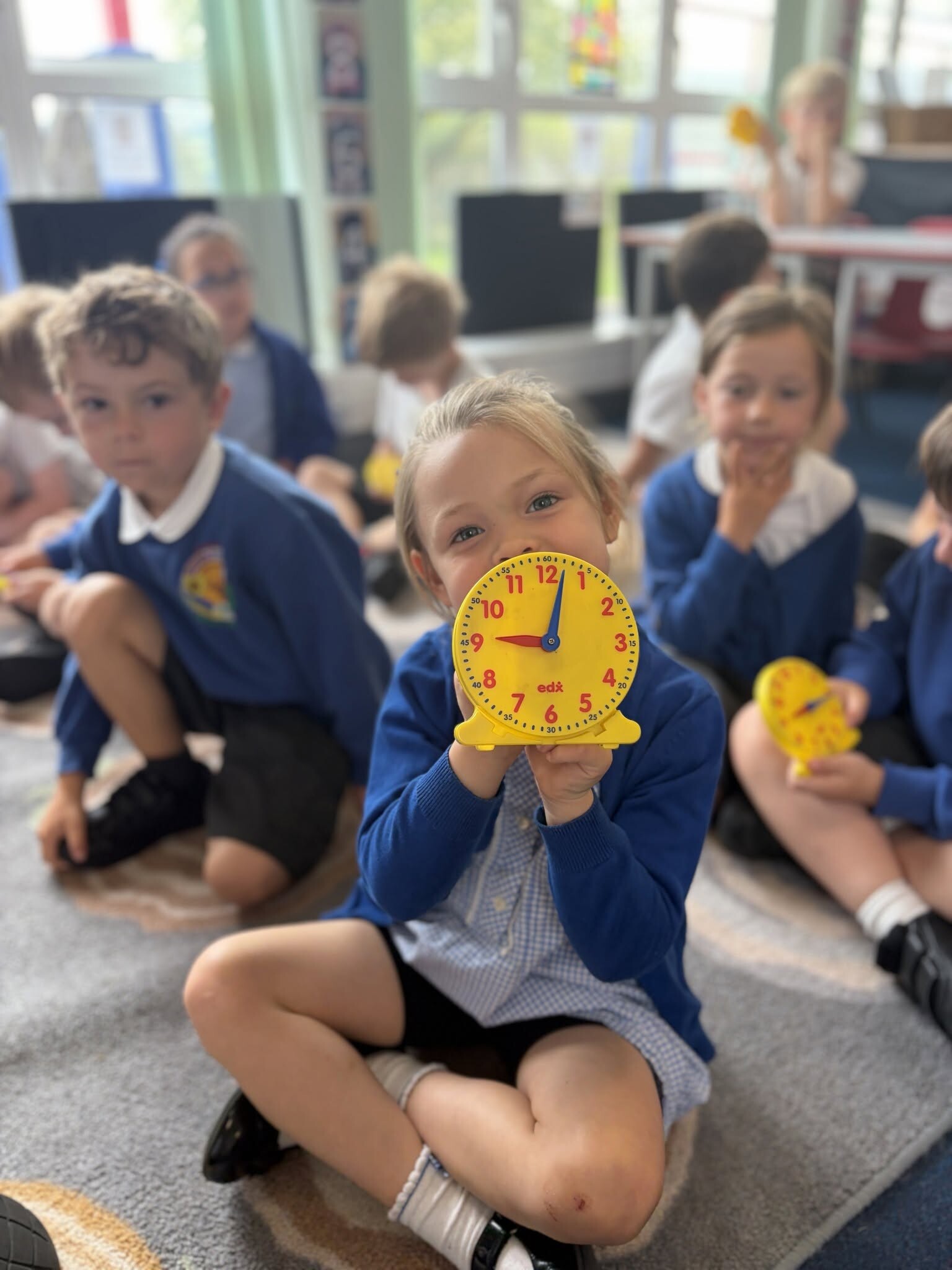
How We Teach Mathematics
Our mathematics curriculum is informed by the principles of mastery and draws upon the progression and structure of the White Rose Maths schemes of learning. Lessons are carefully sequenced to build small-step understanding and provide opportunities for children to practise, apply and deepen their learning.
Learning is structured around three interconnected elements:
Fluency
Developing secure recall of facts, efficient calculation strategies and confidence with number.
Reasoning
Explaining mathematical thinking, making connections, spotting patterns and justifying solutions.
Problem Solving
Applying knowledge and skills in unfamiliar contexts and developing persistence when tackling challenges.
Through high-quality questioning, carefully chosen representations and rich mathematical discussion, children are encouraged to think deeply about mathematics rather than simply follow procedures.
We have high expectations for all learners and believe that every child can achieve in mathematics. Support and challenge are provided through depth of learning, scaffolding and carefully planned tasks, ensuring that all pupils can experience success whilst being appropriately challenged to deepen their understanding.