
"The important thing is not to stop questioning. Curiosity has its own reason for existing."
Albert Einstein
Science at Tintagel Primary School
At Tintagel, we want every child to see themselves as a scientist.
Science is driven by curiosity. It begins with a question, develops through exploration and investigation, and grows through discovery. We want children to leave our school with a secure understanding of scientific concepts, but just as importantly, with the confidence to ask questions, challenge ideas and make sense of the world around them.
Through carefully planned lessons, practical investigations and meaningful discussion, children develop their knowledge of biology, chemistry and physics while learning how scientists work. They observe, predict, test, evaluate and draw conclusions, developing the skills needed to think critically and communicate their findings clearly.
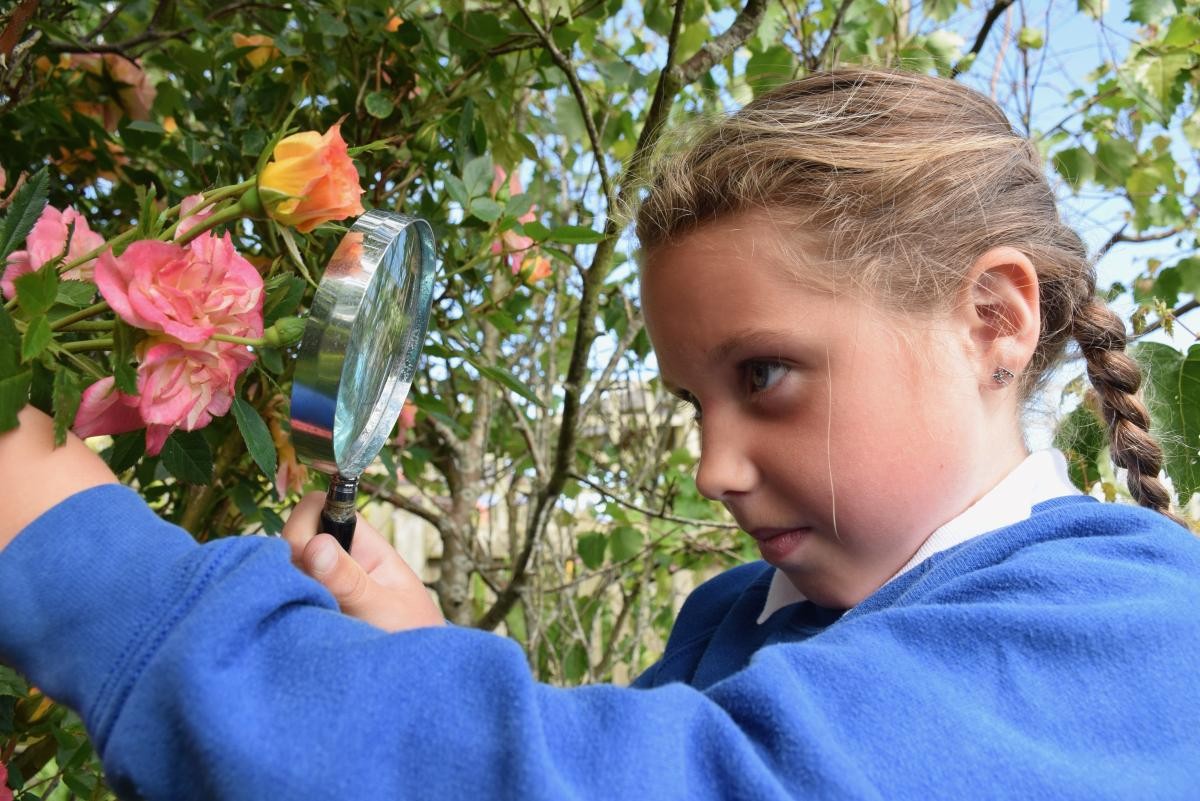
Science at Tintagel extends beyond the classroom. Through exploration of our school grounds, the local environment and the changing seasons, children experience science first-hand and develop a deeper understanding of the natural world. These real-life experiences help children make meaningful connections between their learning and the world around them.
Our Learning Toolkit plays an important role in this journey. Curiosity encourages children to ask questions; resilience supports them when investigations do not go as expected; and participation, independence and risk-taking help them develop as thoughtful and reflective scientists. Together, these dispositions help children develop both scientific understanding and a lifelong love of learning.
Most importantly, we want children to leave Tintagel knowing that science is not simply a collection of facts. It is a way of understanding, exploring and improving the world around us.
Aims:
Through our science curriculum, we aim for children to:
- develop a secure understanding of scientific knowledge and concepts across biology, chemistry and physics;
- ask questions, make predictions and carry out a range of scientific enquiries;
- observe carefully, gather evidence and draw conclusions from their findings;
- use scientific vocabulary accurately to explain, discuss and communicate ideas;
- develop curiosity about the world around them and a desire to find out more;
- understand how science impacts everyday life, both now and in the future; and
- leave primary school as confident, inquisitive learners who enjoy investigating and exploring the world around them.